
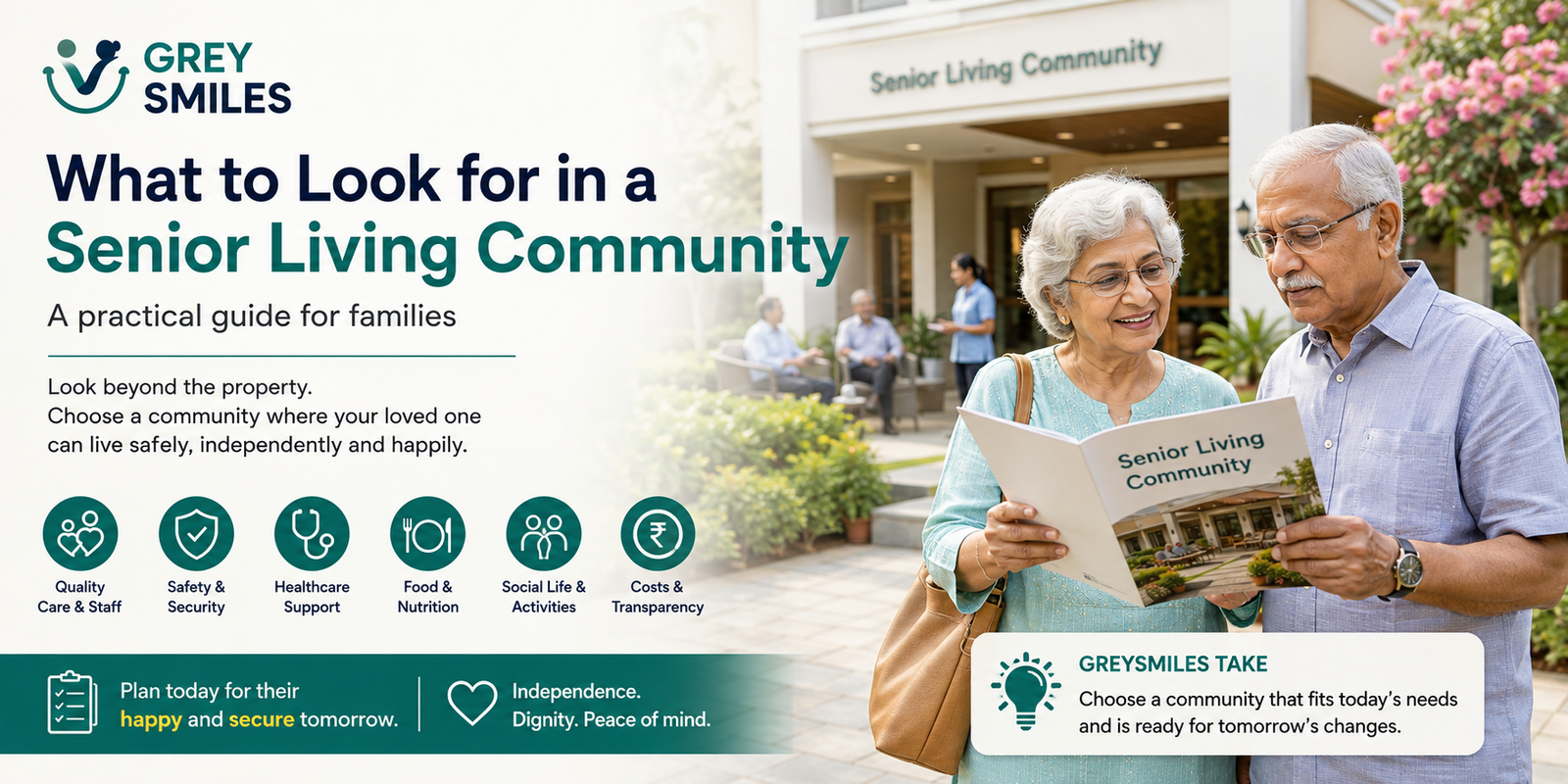
Choosing a senior living community is not simply about finding a comfortable apartment with meals, housekeeping and attractive amenities. For an older person, the right community can influence everyday independence, safety, social connection, access to care and quality of life. For families, it can also provide reassurance that a parent is living in an environment designed around changing needs.
But every community is different. A property may look impressive during a guided tour and still not be the right fit for the person who will actually live there. The best way to evaluate a senior living community is to look beyond the buildings and ask how people actually live there, what happens when their needs change, what the fees really cover and how the community handles difficult situations.
At a Glance
- Start with the person: Understand what the older adult wants, needs and is comfortable with.
- Understand the care model: Ask what happens if health or mobility changes.
- Look at the people: Staff attitude, availability and continuity can matter more than facilities.
- Understand the money: Get every recurring and additional charge in writing.
- Observe everyday life: Visit during a normal mealtime or activity, not just a formal tour.
- Talk to residents: Their experience can reveal what a brochure will not.
- Think ahead: Choose for the next few years, not just today’s needs.
1. Start With the Person, Not the Property
Before visiting communities, think about the person who will actually live there. Someone who is active, independent and looking mainly for companionship may want something very different from someone who needs regular assistance with everyday activities.
Consider their current independence, mobility, food preferences, social interests, need for privacy, medication requirements, driving habits and proximity to children, friends and familiar neighbourhoods. Also think about whether they are likely to need more support over the next few years.
Most importantly, ask the older person what they want. Senior living should not automatically become a decision made entirely by adult children. The person moving in needs to feel that they are choosing a new way of living, not simply being moved somewhere for convenience.
GreySmiles Advice: The best community on paper may be the wrong community for your parent. Start with their preferred way of living, then find the environment that supports it.
2. Understand What “Senior Living” Actually Means
The term senior living can cover very different arrangements. Some communities are designed mainly for independent older adults. Others provide varying levels of assistance with daily activities. Some have healthcare services on or near the premises, while others depend heavily on outside providers.
Do not assume that a community will automatically provide whatever care may be needed later.
Ask two questions before you get too far into the sales conversation:
What level of care does this community provide today?
What happens if the resident needs more care six months or three years from now?
Find out whether residents can remain in the same community when their needs change, whether they have to move to another part of the property, or whether they may eventually need to leave.
That answer can have major financial and emotional consequences.
3. Look Carefully at the Staff
A senior living community is ultimately about people. During a visit, notice how staff members speak to residents. Do they greet residents by name? Do residents seem comfortable approaching them? Do staff appear rushed, respectful and attentive?
Ask about staff-to-resident ratios, qualifications and training, staff turnover, night and weekend availability, emergency procedures, medication management and how complaints are handled.
Staff continuity is worth asking about as well. Older adults may become more comfortable when they regularly see familiar people who understand their routines and preferences.
A community can have beautiful landscaping, restaurants and recreational facilities. But if staffing is inadequate, those features will not compensate for poor day-to-day support.
4. Don’t Just See the Model Apartment
A model apartment is designed to impress you. Try to see the actual living environment.
Look at the room size, storage, bathroom access, flooring, lighting, grab bars, emergency call systems, balcony or window safety, heating and cooling, internet connectivity, laundry arrangements, housekeeping and maintenance response times.
If possible, ask to see a typical occupied unit rather than only the showcase accommodation. Also consider whether the space will still work if mobility becomes more limited.
A beautiful apartment with difficult bathroom access or long corridors may become inconvenient surprisingly quickly.
5. Check Safety Without Making It Feel Like a Hospital
Safety matters, but a good senior living community should not necessarily feel institutional. The right balance depends on the resident’s needs.
Look for practical features such as non-slip flooring, good lighting, accessible lifts and ramps, handrails, emergency call systems, fire safety arrangements, secure entrances, clear evacuation procedures and safe outdoor walking areas.
Then ask what happens during an emergency.
Who is contacted first? Who accompanies the resident? How quickly can medical assistance arrive?
Do not accept vague answers to questions about emergencies.
GreySmiles Thumb Rule: Don’t judge safety by how many security cameras or guards you see. Judge it by what actually happens when something goes wrong.
6. Understand Healthcare Support
Healthcare is one of the most important areas to investigate, particularly if you are choosing a community for a parent who may eventually require more assistance.
Ask whether a doctor is available on-site, whether nursing support is available, whether a nurse is present at night, how emergencies are handled, which hospitals are normally used, whether residents can continue seeing their existing doctors, how medicines are stored and administered, what happens after hospitalisation and whether rehabilitation support is available.
Also ask what happens if the resident develops significant mobility or cognitive difficulties.
Distinguish between healthcare access and healthcare provision. A community saying that a hospital is nearby is not the same as having an established process for responding to a medical emergency.
If healthcare and assisted living are becoming part of the decision, our guide to assisted living in India looks at the broader question of independence, support and changing family circumstances.
7. Eat the Food Before You Decide
Food can become one of the biggest everyday issues in senior living.
Ask about meal timings, menu variety, regional food preferences, vegetarian and non-vegetarian options, dietary restrictions, snacks and beverages, whether residents can cook and whether meals can be delivered to rooms when someone is unwell.
If possible, eat a meal there.
You will learn more from one ordinary lunch than from a brochure describing a “world-class dining experience”. Notice what residents actually eat and whether they seem to enjoy the food.
8. Look at the Social Life
Loneliness can be one of the less visible challenges of later life. A community may offer dozens of activities, but that does not necessarily mean residents participate in them.
Ask what activities happen regularly, whether residents help organise them, whether there are interest groups, walking or fitness activities, opportunities to invite friends and family, and whether there are common spaces where people naturally meet.
But don’t spend too much time looking at the activity calendar.
Look at the residents.
Do people appear to know one another?
That may tell you more about the community than the number of activities advertised.
9. Check How Easy It Is to Stay Connected With Family
Location matters. A community may be excellent but impractical if family members rarely visit because of distance or difficult transport.
Consider access to children and relatives, public transport, parking, nearby hospitals, shops and pharmacies, familiar neighbourhoods and places that matter to the resident. Also check visitor policies and whether family members can stay overnight.
A senior living community should ideally make family relationships easier to maintain, not unintentionally create another barrier.
For parents whose children live in another city or abroad, the wider question of ageing independently deserves attention too. See Ageing Independently in India: How Parents Can Thrive When Children Live Abroad.
10. Understand the Full Cost
Do not compare communities based only on the advertised monthly fee. Ask for a complete written fee schedule.
Understand the initial deposit or entry fee, monthly accommodation charges, maintenance, food, utilities, housekeeping, laundry, medical services, medication assistance, transportation, activities, caregiver support, guest charges, parking and additional care if health needs change.
Also ask about annual increases, refund policies and exit charges.
Then ask one question that often reveals a great deal:
“What could cause our monthly bill to increase?”
You should be able to understand the answer before signing anything.
GreySmiles Advice: Don’t compare communities on the entry price alone. Compare the likely cost of living there over the next five years, including what happens if care needs increase.
11. Read the Contract Before You Fall in Love With the Place
The emotional part of choosing a community often happens during the tour. The financial and legal consequences are in the contract.
Read the agreement carefully and understand what exactly is being provided, the minimum commitment period, deposit and refund conditions, notice period, exit rules, what happens after hospitalisation, what happens if care requirements increase, conditions under which the resident may have to move, annual fee increases, repair responsibilities, visitor rules and what happens if the resident dies.
If the arrangement involves a substantial financial commitment, consider having the agreement independently reviewed before signing.
For broader questions around senior citizens’ rights and welfare in India, the Ministry of Social Justice and Empowerment’s senior-citizen FAQs and the Maintenance and Welfare of Parents and Senior Citizens Act, 2007 are useful official references.
12. Talk to Residents When Staff Aren’t Standing Next to You
This is one of the most useful things a prospective family can do.
If possible, speak privately with residents. Ask how long they have lived there, what they like most, what they would change, how responsive management is, how the food is, whether they feel safe, whether they have enough privacy and whether they would choose the community again.
You do not need every resident to be enthusiastic. What matters is whether the answers feel genuine and whether you hear recurring concerns.
13. Visit More Than Once
A single guided tour gives you only one version of the community.
If possible, visit at different times. Try a weekday and a weekend, and visit around mealtime. If you are seriously considering the community, an unannounced or less formal visit can also be revealing, where permitted.
Look at what happens when there is no sales presentation happening. Are common areas being used? Are staff visible? Are residents interacting? Is the property maintained? Does the community feel peaceful, lively, isolated or overly institutional?
Your impression during an ordinary day may be more useful than your impression during a carefully planned tour.
14. Think About the Next Five Years
One of the most common mistakes is choosing a community based entirely on today’s requirements.
Your parent may be independent today but need more assistance later.
Ask:
“If my parent’s mobility, health or care requirements change, can they remain here?”
Find out what happens if they need a walking aid or wheelchair, help with bathing or dressing, regular nursing support, more medication assistance, rehabilitation, increased supervision or dementia-related care.
The right community does not necessarily have to provide every service itself. But it should have a clear and credible plan for what happens when needs change.
15. Watch for Red Flags
Be cautious if staff avoid answering direct questions, costs are difficult to understand, important terms are only explained verbally, you are discouraged from speaking to residents or the community refuses to explain what happens when care needs increase.
Other warning signs include noticeable staff shortages, disengaged or uncomfortable residents, poor maintenance, unclear emergency procedures, a sales pitch focused heavily on luxury but lightly on care, or pressure to make a quick financial decision.
One red flag does not automatically make a community unsuitable. But several together deserve serious attention.
A Simple Way to Compare Communities
After visiting two or three communities, it can be difficult to remember which one offered what. Create a simple comparison and write down not only the score but why you gave it.
| What to Compare | Community A | Community B | Community C |
|---|---|---|---|
| Location & family access | |||
| Accommodation | |||
| Staff & care | |||
| Healthcare support | |||
| Food | |||
| Social life | |||
| Safety | |||
| Total cost | |||
| Future care options | |||
| Contract terms | |||
| Overall fit |
The Most Important Question
After the tour, forget the brochure for a moment.
Ask yourself:
“Can I imagine my parent actually living a good life here?”
Not just being safe. Not just being looked after.
A good senior living community should ideally offer some combination of independence, dignity, companionship, security and choice.
The best community is therefore not necessarily the newest, largest or most luxurious one. It is the one that fits the person’s current life, respects their independence and has a sensible plan for the years ahead.
GreySmiles Take
Don’t choose a senior living community because it looks impressive. Choose it because you can see the person you love living well there.
Before You Decide
Take your time. Visit more than one community. Talk to residents. Eat the food. Read the contract. Calculate the full cost. Ask uncomfortable questions about care and emergencies.
And involve the older person in the decision as much as possible.
Senior living is not simply about where someone will stay.
It is about how they will live.
Frequently Asked Questions
What should I look for first when choosing a senior living community?
Start with the older person’s needs and preferences. Consider independence, mobility, social interests, food, privacy, healthcare requirements, location and how much support they may need in the future. Only then compare properties and amenities.
How do I know whether a senior living community provides enough care?
Ask exactly what care is available today and what happens if the resident needs more help later. Ask about nursing, medication management, emergencies, rehabilitation, mobility support and higher levels of care. Get important answers in writing.
How much does senior living cost in India?
Costs vary considerably by location, accommodation, services, care level and contract structure. Do not compare only the advertised monthly fee. Ask about deposits, maintenance, food, healthcare, additional care, annual increases, refunds and exit charges.
Should I choose a community close to my children?
Proximity can be valuable, particularly during emergencies and when regular family visits matter. But it should be balanced against the older person’s preferences, healthcare access, transport and the quality of the community itself.
What questions should I ask residents?
Ask how long they have lived there, what they like, what they would change, how responsive management is, whether they feel safe and whether they would choose the community again. Honest conversations can reveal things a formal tour may not.
Should I choose a senior living community that can provide higher care later?
It can be valuable if the resident is likely to need more support. Ask exactly how care escalation works, whether the resident can remain on the property, what additional costs apply and whether the available care is provided directly or through outside providers.
What are the biggest red flags in a senior living community?
Unclear costs, vague answers about emergencies or future care, pressure to sign quickly, difficulty speaking with residents, poor maintenance, inadequate staffing and important contractual terms that are not clearly documented should all prompt closer investigation.
Should the older person make the final decision?
Where the person is capable of making the decision, they should be meaningfully involved. Senior living affects their home, routine, privacy and independence. Family concerns matter, but the older person’s preferences should not be treated as an afterthought.
Further Reading
If you are considering senior living for yourself or a parent, GreySmiles’ guide to assisted living in India explores how support can coexist with independence.
If distance from children is part of the decision, read Ageing Independently in India: How Parents Can Thrive When Children Live Abroad.
You may also want to understand the wider financial journey through 6 Stages of Retirement Planning in India.
For a broader look at the changing senior-living landscape in India, see Age-Positive Senior Living in India: A Real Estate Shift.
Important: Senior living services, contracts, fees and care arrangements vary by provider and location. This article is for general information and is not legal, medical or financial advice. Review the actual agreement and seek appropriate professional advice before making a significant commitment.




Start the conversation
Share a helpful experience, ask a thoughtful question, or add another perspective for fellow readers.